
The submission was made by the UN Special Rapporteurs on the promotion and protection of the right to freedom of opinion and expression Irene Khan; on the rights to freedom of peaceful assembly and of association Clement Nyaletsossi Voule; and the right to privacy, Joseph Cannataci.

Intelligent tools are being deployed to detect content pirated from OTT platforms.

Paytm will look to raise up to $1.5 billion as part of primary share sale, leading up to its initial public offering (IPO), which is planned for November, a person familiar with the developments said. The company is looking to file its draft red herring prospectus (DRHP) by July, according to sources. According to this person, though the details of the listing are being worked out, Paytm may take the qualified institutional buyer (QIB) route to list and issue fresh equity to raise funds.

As it readies for its initial public offering (IPO) later this year, digital payments firm Paytm is honing its strengths to remodel itself from being a payment wallet to becoming a financial services provider, and is working towards narrowing its losses, evident from its most recent Annual Report. Unlike many of its peers, Paytm has started expanding its merchant payment ecosystem. It has realised that though it can take the maximum share of the Unified Payment Interface (UPI) transactions, from a revenue generation point of view it will not have any impact.

Zerodha will not raise external funds now or in the future, because it is profitable and has zero debt.

Digital payments provider Paytm is all set to make its market debut as early as this year, with an aim to raise $3 billion (around Rs 22,000 crore). If successful, this could be the biggest initial public offering (IPO) by an Indian company, breaking Coal India's 2010 record of Rs 15,475 crore. According to media reports, the board of One97, parent company of Paytm, is all set to meet this Friday to formally approve the IPO plan.

As the deadly second wave of the Covid-19 pandemic rages on, startups and technology firms are realising the burnout effect it is having on employees. Many have shortened their work weeks to four days, while others have made provisions for more time off for employees to help them rejuvenate or care for loved ones.

The US government has removed a regulation proposed by former president Donald Trump's administration that sought to narrow the definition of "specialty occupation" under the H-1B visa regime. The change comes as a relief for Indian information technology firms, which are among the largest users of such visas. "The Department of Homeland Security (DHS) has formally vacated a regulation that would have redefined the H-1B specialty occupation, restricted off site placement of H-1B employees, and otherwise increased employer compliance obligations. "The vacatur follows a federal court ruling that set aside the regulation because the agency did not have good cause to bypass notice and comment rulemaking, in violation of the Administrative Procedures Act," explained immigration law firm Fragomen.

With scrutiny that comes with a public listing, Deepinder Goyal's leadership could face its sternest test yet.
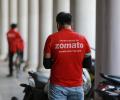
Zomato said it has consistently gained market share over the last four years to become the category leader in the food delivery space in India in terms of gross order value from October 1, 2020 to March 31, 2021.

To be able to manage any such uptick, Indian IT services players are hiring more locals, and relying on hybrid work models.

Home ministry asks IT ministry to order social media platforms to remove around 100 posts or URLs.

Amid oxygen shortage and a faltering health system in the country, India is seeing over 300,000 cases daily.

Infosys, Facebook, Genpact, and Cognizant, among others, have reached out to employees and offered support in different ways as the second wave of Covid cases sees an exponential rise. Companies are asking employees to stay indoors and prioritise the health and safety of their families. This is of significance as several information technology firms were going to take a call on work-from-home from June and had plans to allow some employees to come back to work.

Domino's India data that included sensitive customer information such as their names, phone numbers, and credit card details has allegedly been breached and put on sale on the dark web. According to tweets by Israel-based Co-Founder and Chief Technology Officer of cybercrime intelligence firm Hudson Rock, Alon Gal, the data is worth 13 terabytes (TB). He tweeted on Sunday that the data includes as many as 180 million order details, including 1 million credit card details. The data, said Gal, was up for sale on the dark web. The threat actor, he said, was asking for $550,000 for the data.


The content eligible for review includes posts, status updates, photos, videos, comments, and shares.

If the data breach is found to be genuine, and if the company is found guilty on the grounds of dereliction of duty, or misleading the general public and the RBI about the data breach, actions taken against it will be severe, the person quoted above said.

Many people posted screenshots of the alleged MobiKwik user data, which, according to sources, was up for sale for 1.5 bitcoin or about $86,000.

There is a perception getting built inside the government that big technology companies -- a common term used for firms like Facebook, Google, Twitter, Amazon and the like - are becoming very powerful and present multiple threats to entire nations and their citizens today. The digital ecosystem is replete with CSAM (child sexual abuse material), fake news, drug trade, radicalisation, trolling among other social vices. Given the network effect that these platforms have, it is important to ensure that these platforms are not misused.
 © 2026 Rediff.com - Advertise with us - Disclaimer - Privacy Policy - Sitemap - Feedback - About us - Terms of use - Grievances